Watch Education · Chronograph Basics · Buying Guide
If you have ever looked at a watch with extra dials clustered around the centre and wondered what they do, you have already met a chronograph. So, what is a chronograph watch exactly? In simple terms, a chronograph is a watch that can measure elapsed time in addition to telling the time of day. It works like a built-in stopwatch sitting on your wrist.
This guide breaks down the chronograph meaning, explains chronograph mode in plain English, and shows you exactly how to read one. By the end, you will understand the difference between a chronograph and a regular watch, and you will know what to look for the next time you go shopping.
Chronograph Meaning: Where Does the Word Come From?
The word “chronograph” comes from two Greek roots: chronos, meaning time, and graph, meaning to write. Put together, the chronograph meaning is literally “time writer.” Early chronographs from the 1800s used actual ink to mark a dial as time passed, which explains the name.
Today, when people define chronograph watches, they simply mean any watch with a built-in stopwatch function. Therefore, the chronograph watch meaning has stayed consistent for almost two centuries, even though the mechanics inside have advanced enormously.
So, What Does Chronograph Mean on a Watch Dial?
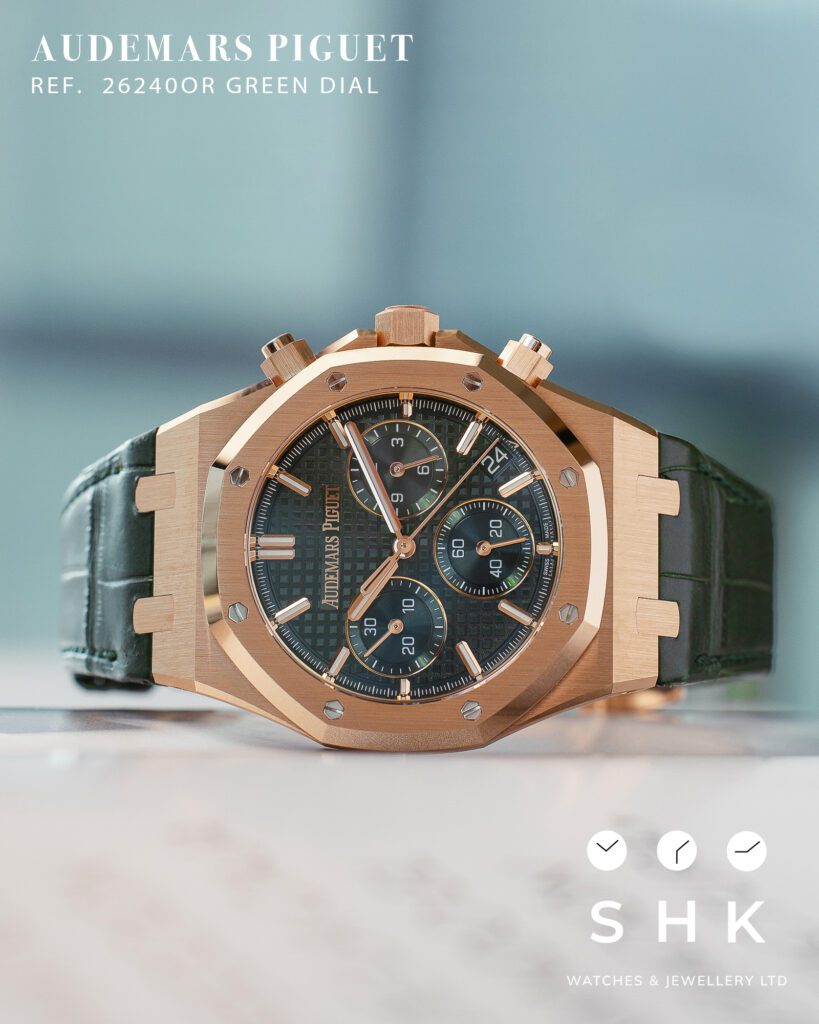
Audemars Piguet Royal Oak Chronograph, green dial, three sub-dials clearly visible. Use here to point out the visual chronograph layout.
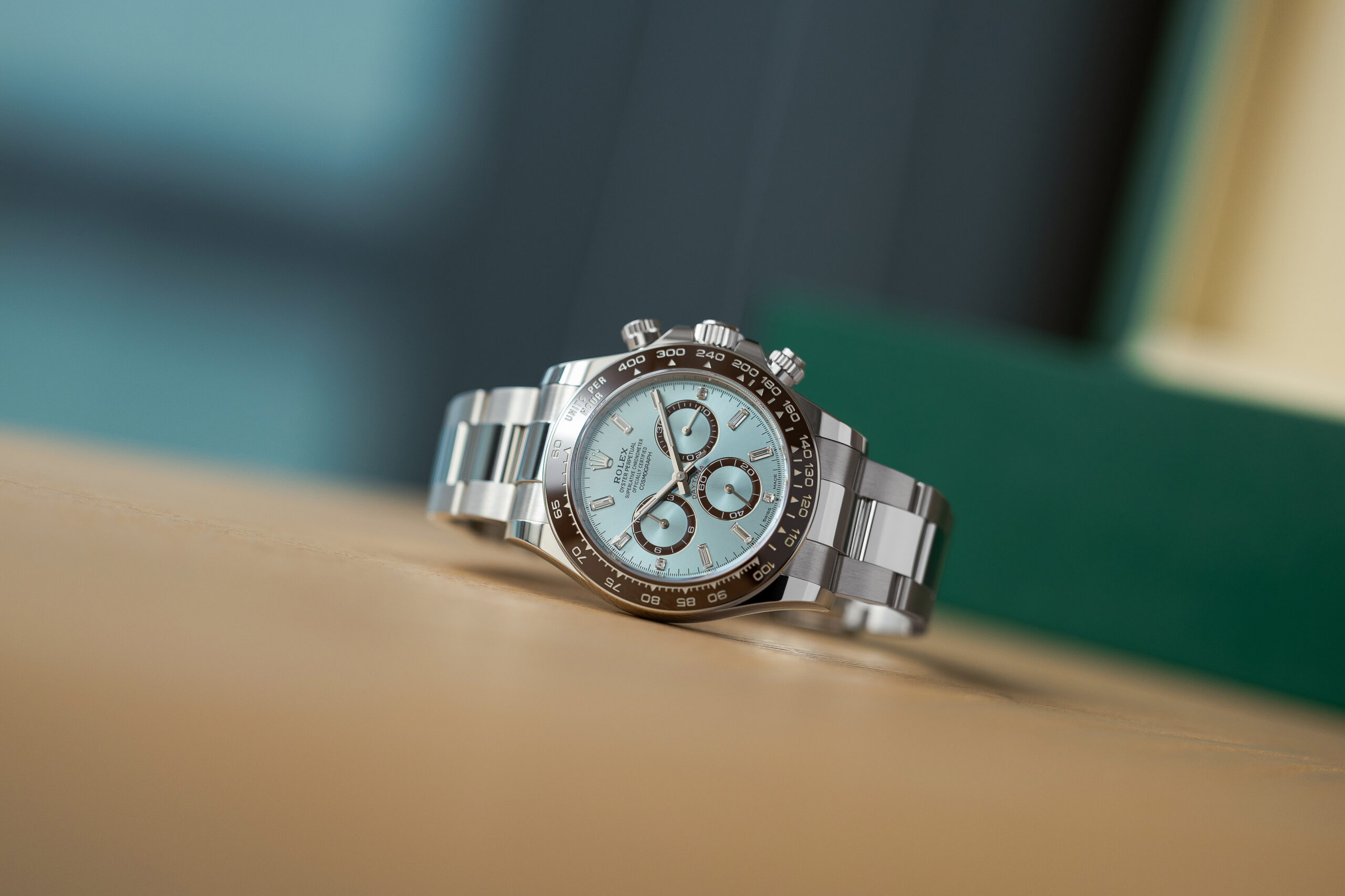
When you see a watch with two or three small circular dials inside the main dial, you are looking at chronograph sub-dials. These are called registers, and each one tracks a different unit of time. Typically, you will find:
- A small seconds register, often counting up to 30 or 60 seconds
- A minutes register, usually counting up to 30 or 45 minutes
- An hours register, often counting up to 12 hours
Additionally, most chronographs include two extra buttons on the case, called pushers, positioned above and below the main crown. These buttons control the chronograph function. The top pusher starts and stops the stopwatch, while the bottom pusher resets it back to zero.
This is the simplest way to define chronograph at a glance: if a watch has these registers and pushers, it is almost certainly a chronograph.
How Chronograph Mode Actually Works
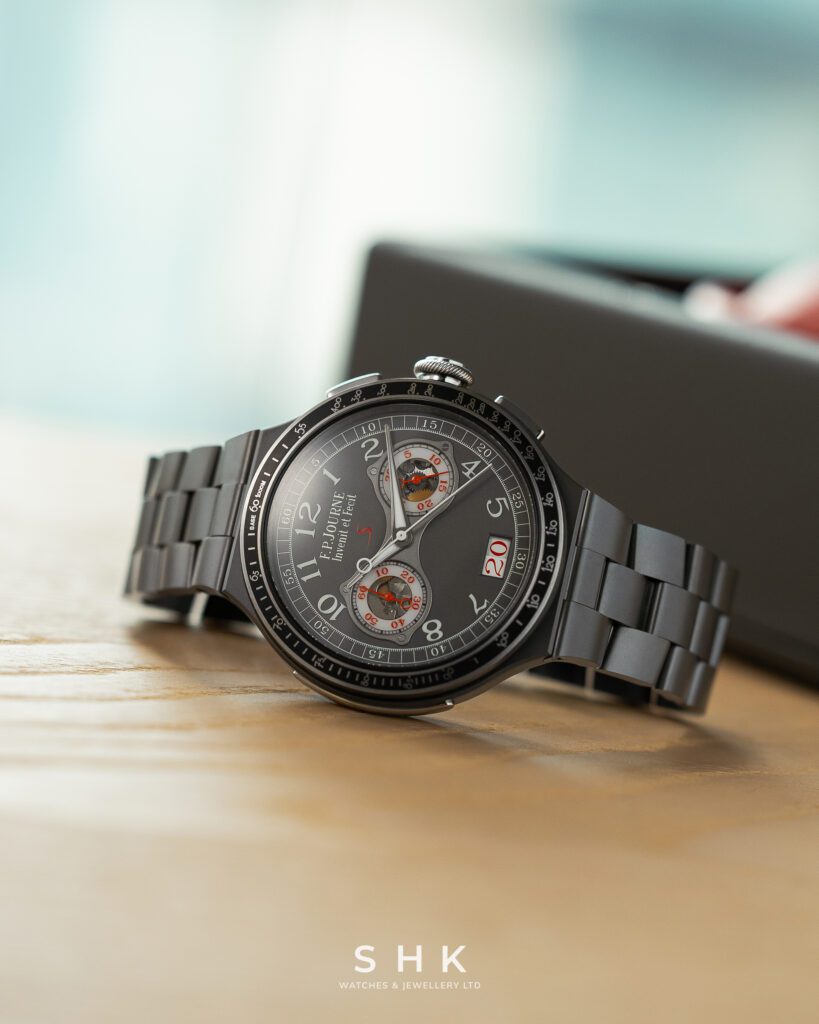
Inside a mechanical chronograph, a separate set of gears engages only when you activate chronograph mode. Pressing the top pusher engages a clutch, which connects the chronograph’s central seconds hand to the watch’s regular movement. As a result, that hand begins sweeping around the dial, measuring elapsed time independently from the normal hour and minute hands.
When you press the pusher again, the clutch disengages and the chronograph hand stops. Press the bottom pusher, and a hammer mechanism strikes the chronograph gears back to their zero position. This three-step sequence — start, stop, reset — is exactly how chronograph mode functions on almost every mechanical chronograph ever made.
Quartz chronographs work differently. Instead of mechanical gears, an electronic circuit drives the chronograph hands using a battery-powered motor. Consequently, quartz chronographs are usually more affordable and more accurate for timing short intervals, though many collectors still prefer the craftsmanship of a mechanical chronograph movement.
What Is a Chronograph Watch Actually Used For?
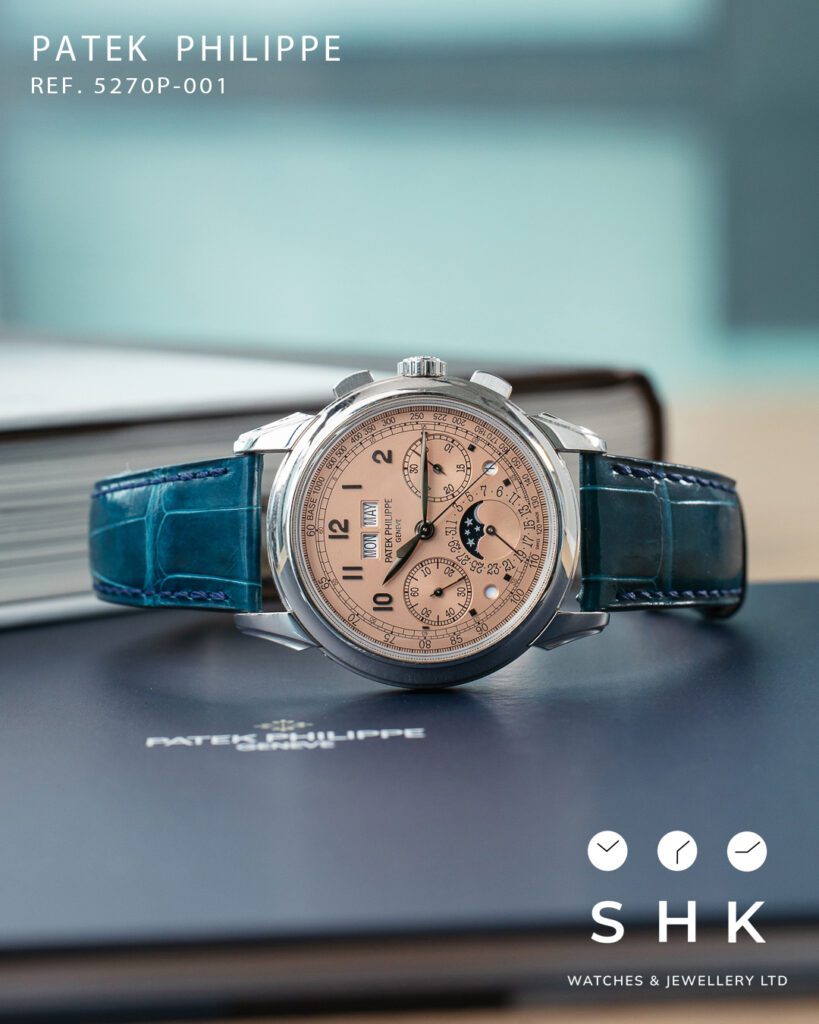
Chronographs were originally built for genuinely practical reasons. Race car drivers used them to time laps. Pilots used them to calculate fuel consumption and flight duration. Doctors used them to measure a patient’s pulse rate using a special scale printed on the dial bezel, called a pulsometer.
Today, most people use a chronograph for far simpler tasks: timing a workout, tracking how long a meeting runs, or simply measuring how long the coffee needs to brew. However, the underlying engineering remains exactly the same, regardless of whether you are racing a car or boiling an egg.
This practical history is part of why the chronograph watch meaning carries such weight in horology. It is not just a stylistic feature. It represents genuine functional engineering that solved real problems for over a century.
Chronograph vs Regular Watch: What’s the Difference?
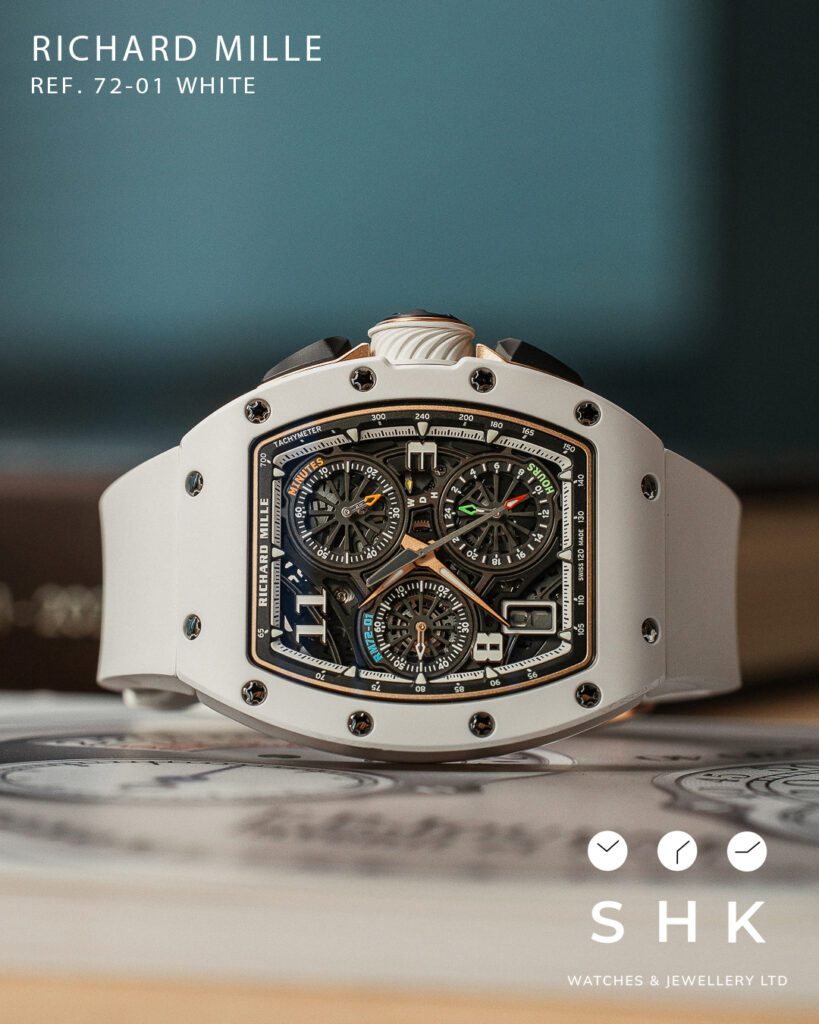
A regular watch tells you the time of day. A chronograph does that too, but it also lets you measure how much time has passed during a specific activity. Therefore, the easiest way to define chronograph in contrast to a standard watch is this: a chronograph adds a stopwatch function on top of normal timekeeping.
Visually, chronographs are usually easy to spot. Look for:
- Two pushers on the case, in addition to the crown
- Two or three sub-dials inside the main dial
- A tachymeter scale on the bezel or dial edge, used to calculate speed
Many chronographs also include a tachymeter scale, which calculates speed based on travel time over a fixed distance. This is a popular feature in motorsport-inspired watches and adds another layer to what a chronograph can do beyond simple time tracking.
Reading a Chronograph: A Simple Walkthrough
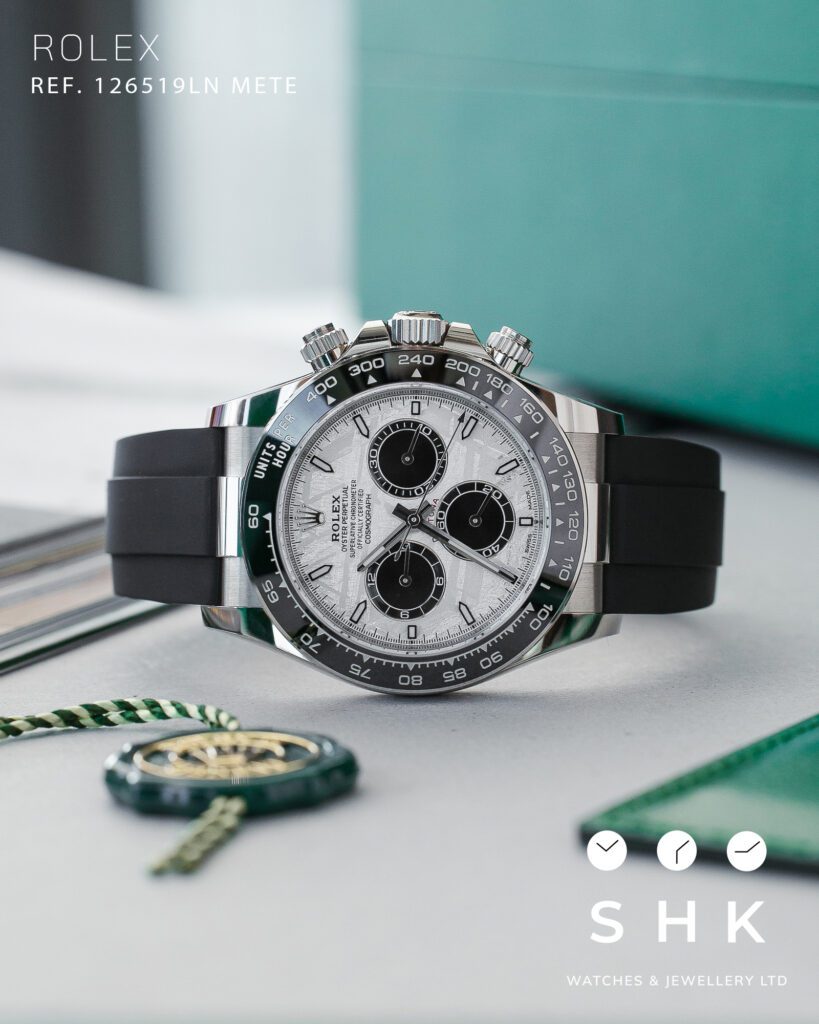
Let’s put the chronograph meaning into practice with a simple example. Imagine you want to time a five-minute workout.
First, press the top pusher to start the chronograph. The central chronograph seconds hand begins sweeping around the dial. After one full minute, the minutes register — usually located at the 3 o’clock or 9 o’clock position — advances by one increment.
After five minutes, you press the top pusher again to stop the chronograph. At this point, you simply read the minutes register to confirm five minutes have passed, while the seconds hand shows the additional seconds within that final minute. Finally, press the bottom pusher to reset everything back to zero, ready for the next use.
This process feels intuitive within a few tries, and it explains exactly what chronograph mode is designed to do: track elapsed time accurately, independent of the regular time display.
Common Chronograph Terms You Should Know
To fully understand chronograph watches, it helps to know a few extra terms:
- Flyback chronograph — Allows the chronograph to reset and restart instantly with a single button press, without needing to stop first.
- Split-seconds chronograph (rattrapante) — Uses two overlapping seconds hands to time two events that start together but end at different times.
- Monopusher chronograph — Uses a single button to control start, stop, and reset, instead of two separate pushers.
- Column wheel — A traditional mechanism inside high-end chronographs that controls the start, stop, and reset functions with exceptional precision.
These variations show just how far chronograph technology has developed, even though the fundamental chronograph watch meaning has not changed since the 19th century.
Quick Summary
- Chronograph meaning: A watch with a built-in stopwatch function
- Origin: Greek words for “time” and “writer”
- Key features: Pushers, sub-dials, and often a tachymeter
- Chronograph mode: Start, stop, and reset elapsed time independently of normal timekeeping
- Common uses: Sports, motorsport, aviation, and everyday timing tasks
- Movement types: Mechanical (gear-driven) and quartz (battery-driven)
Final Thoughts
Understanding what a chronograph watch is opens up a much deeper appreciation for watchmaking as a whole. Once you know how to define chronograph functions and recognise chronograph mode on a dial, you will start noticing these details on nearly every luxury watch you come across. Moreover, this knowledge makes shopping for your next watch far easier, since you will immediately understand what those extra buttons and sub-dials are actually for.
Whether you are drawn to a vintage-inspired piece or a modern sports chronograph, the core mechanics remain rooted in over a century of genuine engineering history. That, in the end, is the real chronograph watch meaning — function built directly into form.