
Richard Mille · RM 67-02 · Automatic Extra-Flat · Carbon TPT & Quartz TPT
Richard Mille rarely builds a watch just to look good on a wrist. Instead, the brand designs each model around a specific athlete and a specific sport. The RM 67-02 proves this point perfectly. It is the lightest automatic watch Richard Mille has ever made, weighing just 32 grams. Therefore, it had to survive ski slopes, rally stages, and Olympic-level stress without losing an ounce of precision.
Today, we are looking at two of the most desired versions: the white Quartz TPT® case made for French alpine skier Alexis Pinturault, and the Carbon TPT® case made for rally legend Sébastien Ogier. Both share the same engineering DNA. However, each tells a very different story through colour, material, and finish.
A Watch Built for Speed, Not Just Style
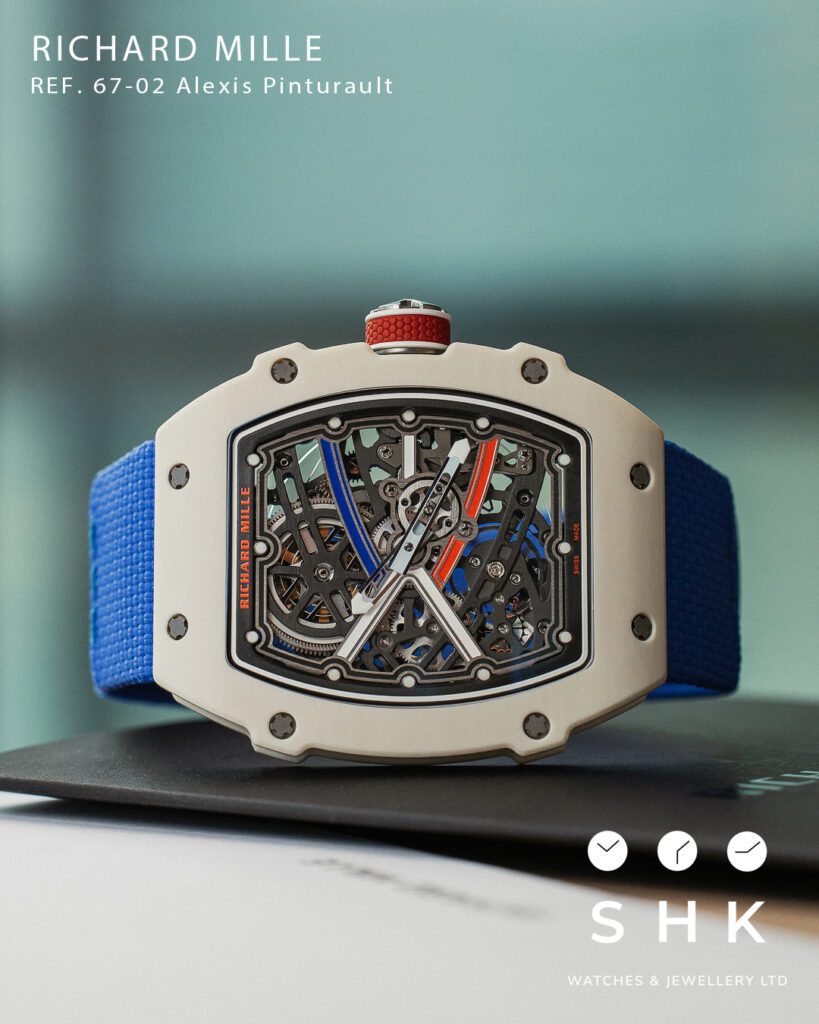
The RM 67-02 case measures 47.25mm x 38.70mm. Despite this generous footprint, the watch sits remarkably flat and light on the wrist. This is because Richard Mille uses two signature composite materials here: Carbon TPT® and Quartz TPT®. Both are exclusive to the brand and offer exceptional shock resistance — a non-negotiable requirement for an athlete sprinting down a mountain or gripping a rally wheel.
Inside, the automatic-winding CRMA7 calibre powers the watch. The baseplate uses grade 5 titanium with a black DLC treatment, which adds rigidity and ensures perfect surface flatness. As a result, the gear train operates with exceptional precision even under heavy vibration. The bridges share the same titanium construction, finished with a lighter grey DLC coating. Furthermore, every component is satin-finished, microblasted, and bevelled entirely by hand.
The movement delivers a power reserve of approximately 50 hours, with a tolerance of plus or minus 10 percent. That is a strong figure for a watch this thin and this light.
The Alexis Pinturault Edition: White Quartz TPT®
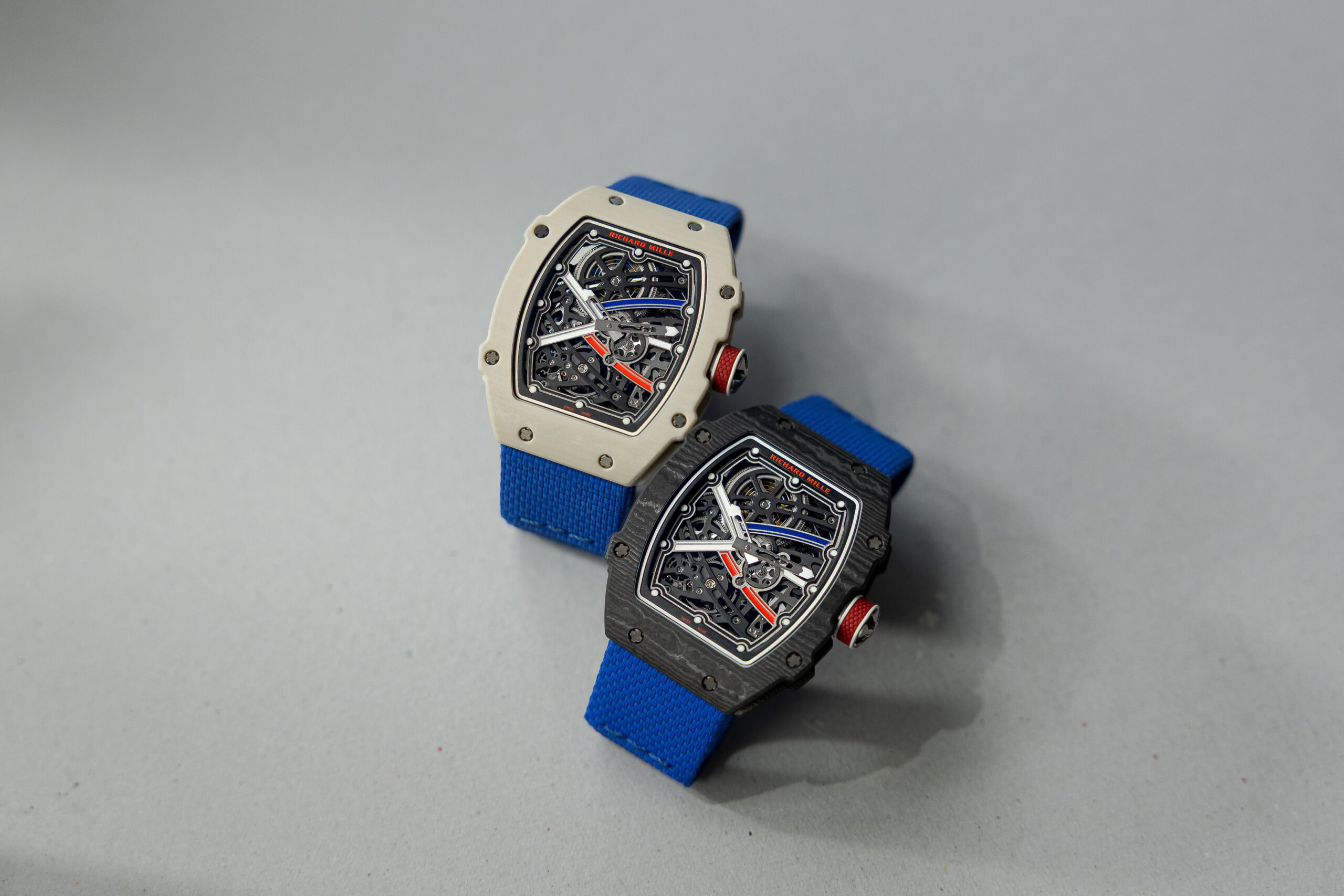
The Pinturault edition uses a white Quartz TPT® bezel and caseback, paired with a Carbon TPT® caseband. Consequently, the case has a soft, marbled white finish that looks almost ceramic in texture. The bridges are hand-painted in the colours of the French flag — a small but meaningful detail that connects the watch directly to Pinturault’s nationality and his career as an Olympic medallist skier.
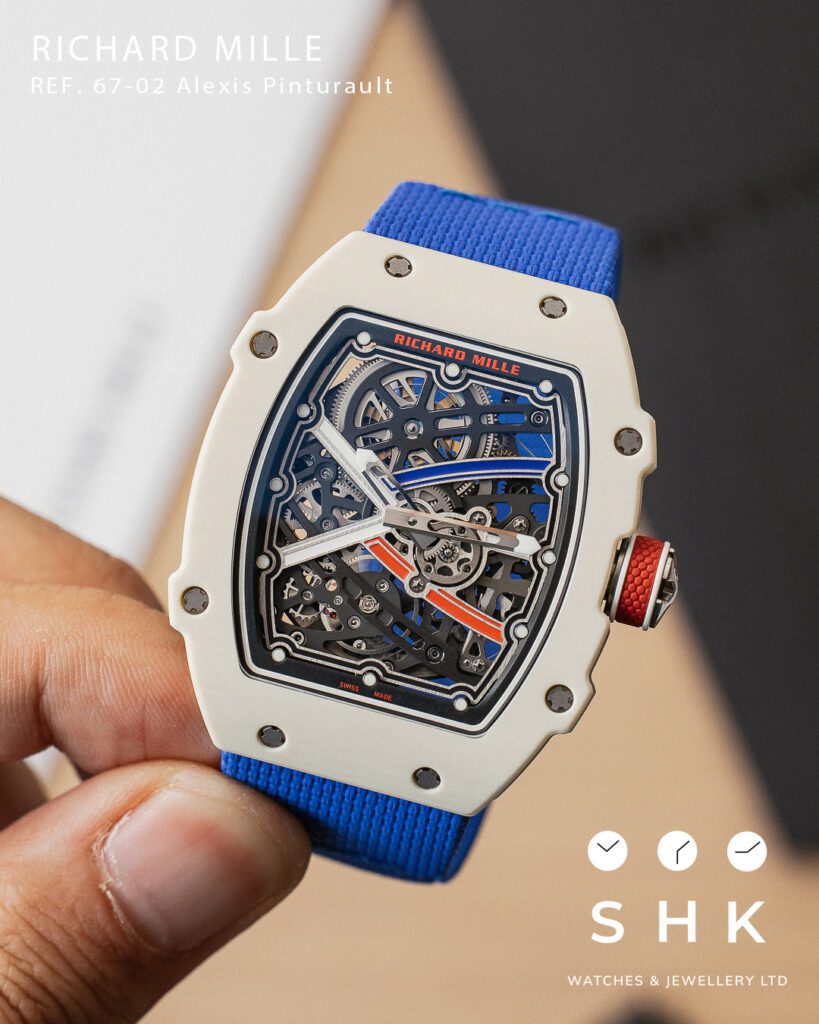
The red crown and blue strap complete the French colour scheme. Meanwhile, the skeletonised dial reveals the entire automatic movement underneath. The blue and orange accent lines on the bridges are not just decorative — they help with quick legibility against the busy mechanical backdrop, a detail that matters when checking the time mid-race.
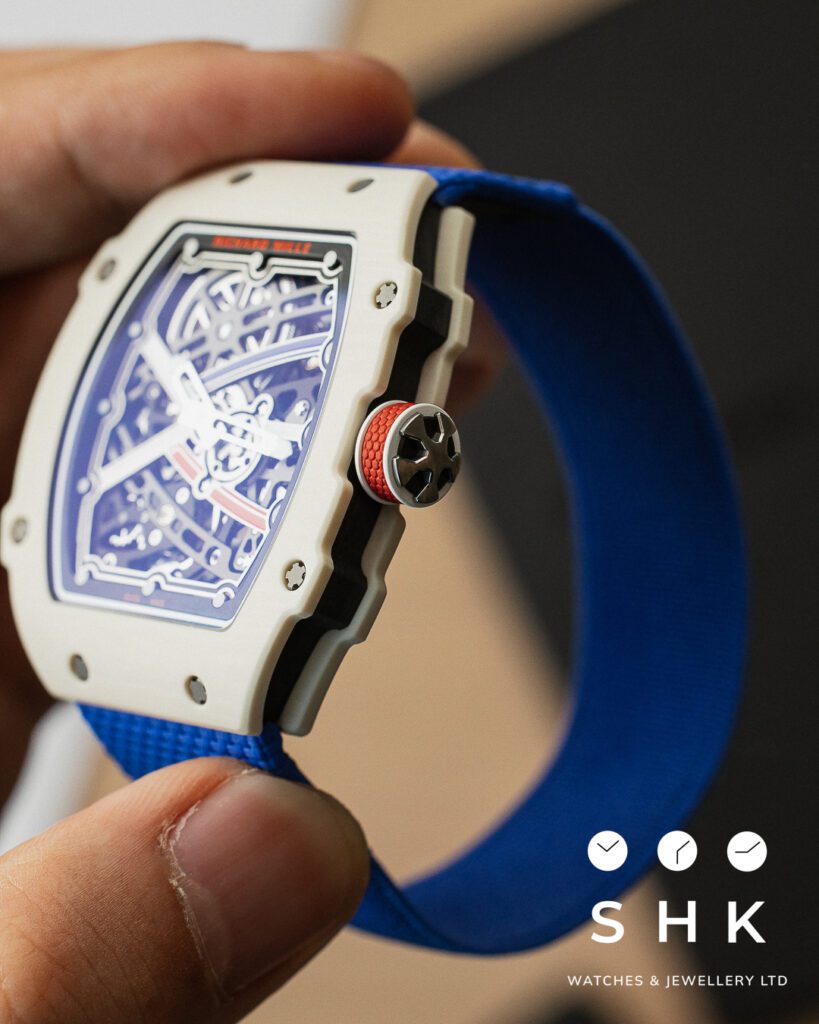
Despite its technical density, the case remains impressively slim. The side profile shows just how flat this watch sits, which explains why it disappears comfortably under a ski glove or racing suit. The crown, fitted with a textured red rubber inlay, offers secure grip even in cold or wet conditions.
The Sébastien Ogier Edition: Carbon TPT® in Full Force
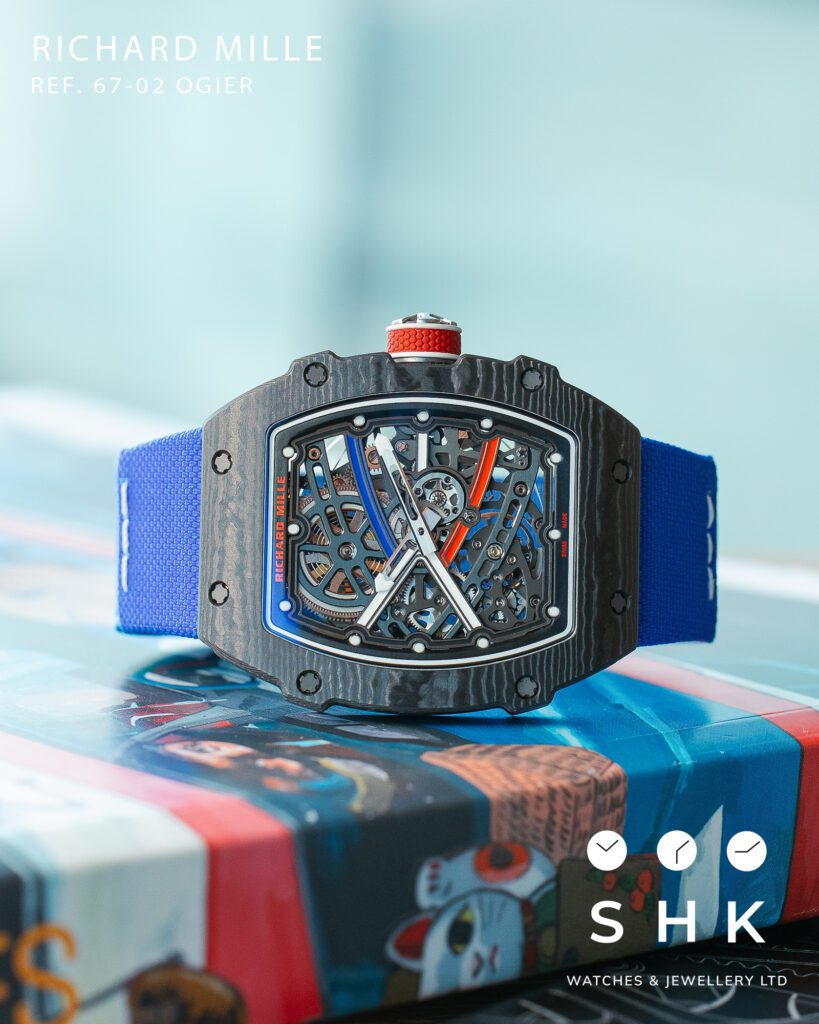
The Ogier edition takes a different visual approach. Here, Richard Mille uses Carbon TPT® throughout the entire case, creating a deep, woodgrain-like black texture across the bezel, caseband, and caseback. This material is built up from hundreds of layers of carbon fibre, compressed under heat to form a pattern that is genuinely unique on every single watch produced.
This particular reference was designed for Ogier’s life on rally stages, where the watch needs to withstand constant jolts and impacts. Carbon TPT® delivers on that requirement while keeping total weight extremely low.
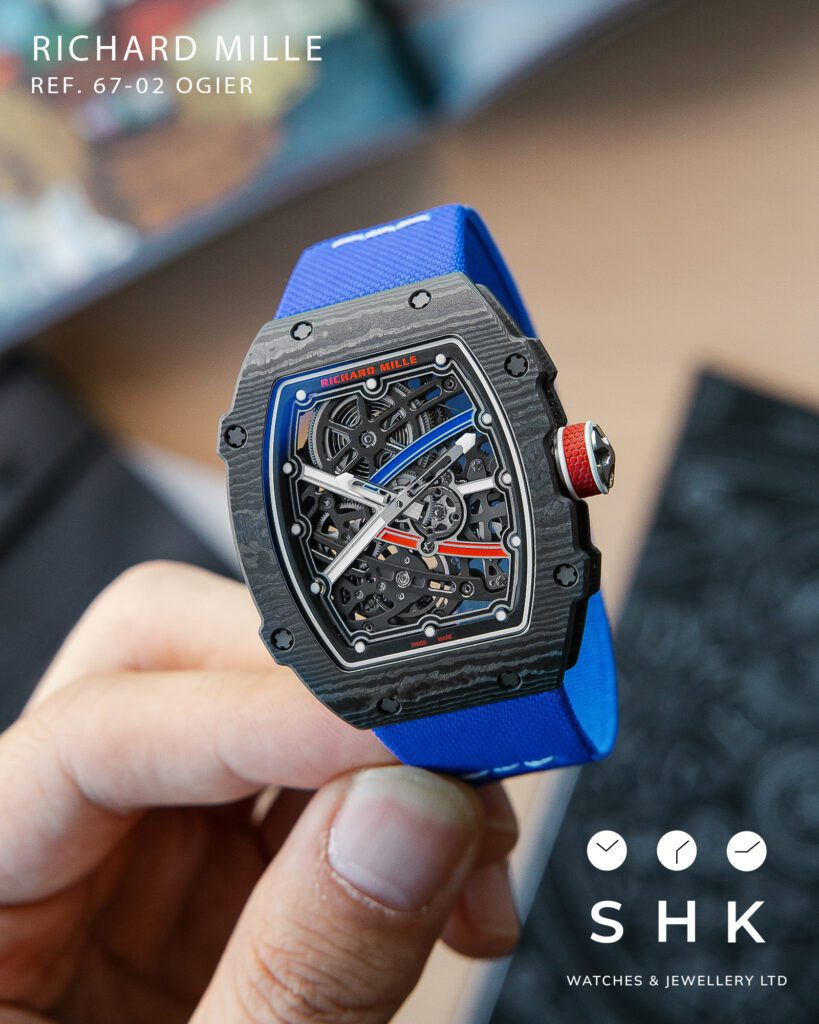
The dial follows the same skeletonised design as the Pinturault version, but the darker case creates stronger contrast against the silver-toned bridges and blue accent lines. Additionally, the red “RICHARD MILLE” branding at 9 o’clock pops vividly against the black carbon backdrop.
The Strap: Built for Performance, Not Just Looks
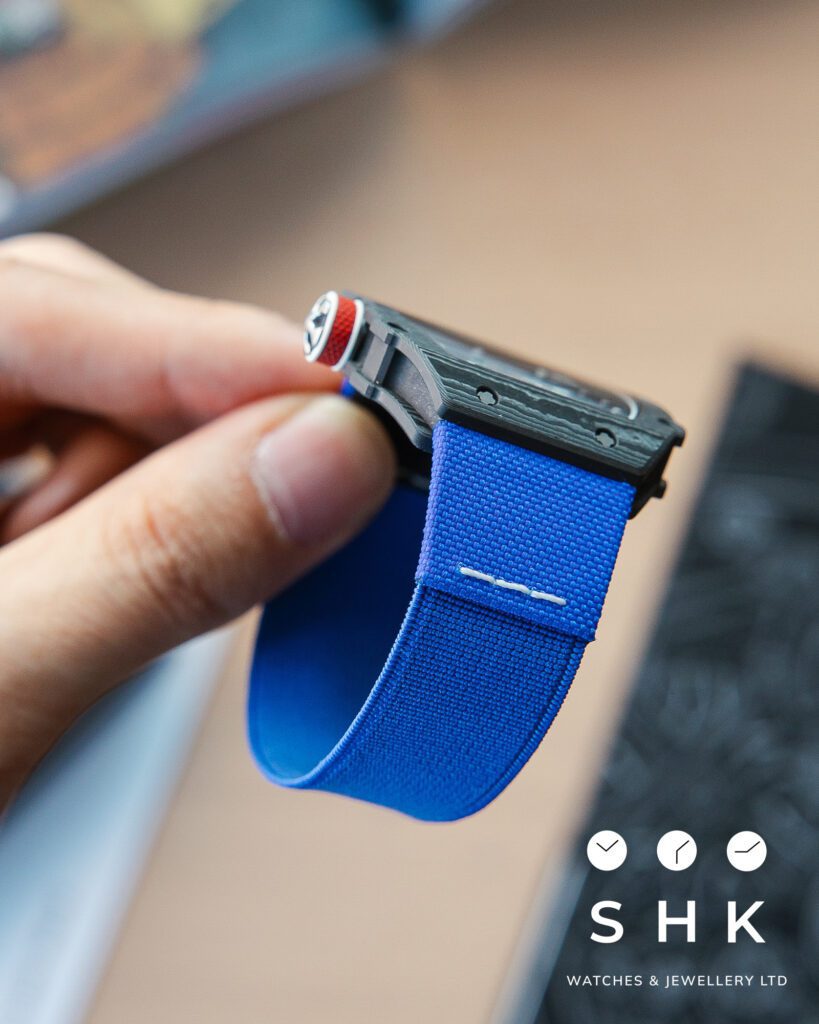
Both editions use a textile comfort strap made from a highly elastic material. The blue colourway ties both watches together visually, despite their different case materials. Up close, you can see the woven texture of the strap fabric, designed to flex naturally with wrist movement during high-intensity activity. This is far removed from a traditional leather strap — it behaves more like sportswear than classic watchmaking.
The strap attaches directly to the case using a quick-release mechanism, which is common across Richard Mille’s sport-oriented references. Therefore, swapping straps for cleaning or replacement is straightforward.
The View Through the Caseback
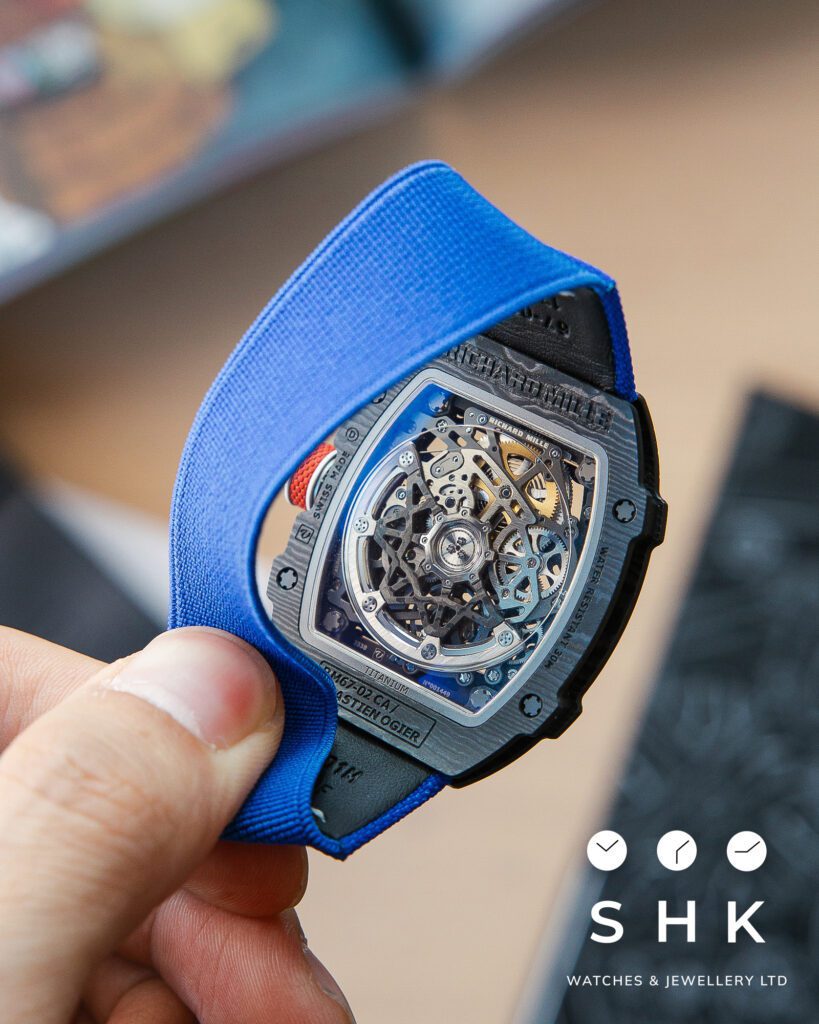
Flip either watch over, and the CRMA7 movement reveals itself in full. The architecture is unmistakably Richard Mille: an angular, skeletonised bridge structure that looks more like a piece of aerospace engineering than traditional watchmaking. The engraved caseback confirms the reference and limited edition details specific to each athlete collaboration.
This view also highlights the sheer complexity packed into such a thin case. The movement’s automatic rotor, finished in white gold and Carbon TPT®, sits visibly at the centre, continuously winding the mainspring as the wearer moves.
Quick Specifications
- Reference: RM 67-02 Automatic Extra-Flat
- Case Size: 47.25mm x 38.70mm
- Case Materials: Quartz TPT® / Carbon TPT® (varies by edition)
- Total Weight: Approximately 32 grams
- Movement: Calibre CRMA7, automatic winding
- Baseplate: Grade 5 titanium with black DLC treatment
- Bridges: Grade 5 titanium with grey DLC treatment
- Power Reserve: Approximately 50 hours (±10%)
- Water Resistance: 30 metres
- Functions: Hours, minutes
- Strap: Elastic textile comfort strap, blue
- Editions Featured: Alexis Pinturault (White Quartz TPT®), Sébastien Ogier (Carbon TPT®)
- Price: Originally launched at €132,500; current market prices vary by edition and condition
Which Edition Should You Choose?
Choosing between these two editions comes down to personal taste rather than performance differences, since both share the identical CRMA7 movement and case architecture. However, the visual experience differs significantly.
The Pinturault edition suits collectors who want a brighter, more colour-forward piece with clear French flag styling. In contrast, the Ogier edition appeals to those who prefer a darker, more textural finish that lets the carbon fibre pattern speak for itself.
Either way, both watches represent exactly what Richard Mille does best: engineering built for extreme performance, wrapped in a design language that turns a sports collaboration into a genuine collector’s piece.