
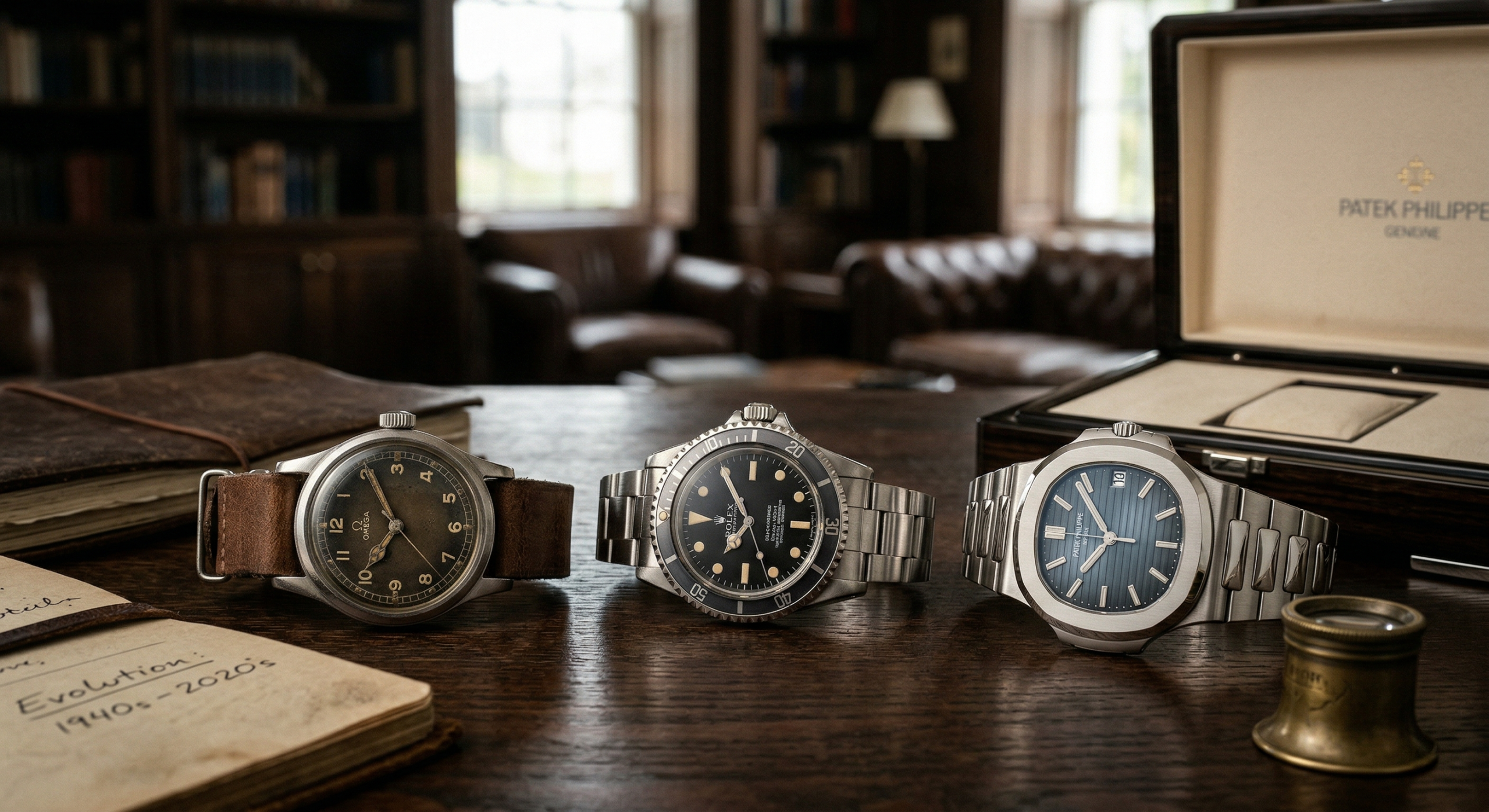
From Status Symbol to Investment Asset: Evolution of Watches
The wristwatch has journeyed far beyond its original purpose of timekeeping. Once a simple tool strapped to the wrist, it has transformed into a powerful symbol of status, a canvas for artistry, and now, a legitimate investment asset. In an age where technology constantly evolves, the mechanical watch has not only endured—it has thrived, captivating collectors and investors alike.
But how did we get here? What catalyzed this transformation? Let’s explore the fascinating evolution of watches from humble beginnings to coveted treasures.
The Origins: Functionality First
In the early 20th century, wristwatches were primarily utilitarian devices. Soldiers in World War I needed quick access to time without fumbling for a pocket watch. Brands like Omega and Longines stepped in, crafting robust and reliable timepieces for the battlefield.
At this stage, watches were valued for their precision and durability, not their aesthetics or prestige. They were tools, not treasures.
Key Milestones in Early Watchmaking
- 1904: Louis Cartier creates the Santos for aviator Alberto Santos-Dumont.
- 1926: Rolex introduces the first waterproof wristwatch, the Oyster.
- 1930s: The shift from pocket watches to wristwatches accelerates globally.
The Rise of the Status Symbol
Post-World War II prosperity ushered in a new era. As economies boomed, particularly in the United States and Europe, conspicuous consumption became fashionable. Watches evolved into markers of success and taste.
Brands like Rolex, Patek Philippe, and Audemars Piguet began crafting watches that were as much about design and exclusivity as they were about function. Owning a luxury watch signaled that you had “”made it.””
Iconic Models That Defined an Era
- Rolex Submariner (1953): The quintessential dive watch, beloved by adventurers and businessmen alike.
- Patek Philippe Calatrava (1932): The epitome of understated elegance.
- Audemars Piguet Royal Oak (1972): A bold, luxury sports watch that defied conventions.
The Collector’s Passion: Rarity and Heritage
By the late 20th century, watches had become more than just accessories—they were collectibles. Limited editions, discontinued models, and watches with historical significance began commanding astronomical prices at auction.
Collectors sought pieces with stories: a Rolex Daytona once owned by Paul Newman, or a Patek Philippe Grandmaster Chime that took years to craft. The emotional connection to these timepieces often outweighed their practical use.
What Makes a Watch Collectible?
- Rarity: Limited production runs or discontinued models.
- Provenance: Previous ownership by notable figures.
- Condition: Original parts and minimal wear increase value.
- Brand Heritage: Legacy brands with a storied history.
The Modern Investment: Watches as Assets
In recent years, the narrative has shifted again. Watches are now viewed as alternative investments, comparable to fine art, wine, or classic cars. The global watch market has seen unprecedented growth, with certain models appreciating by over 100% in just a few years.
Why the surge? Several factors contribute:
Factors Driving Watch Investment
- Limited Supply: High demand and controlled production keep prices high.
- Tangible Asset: Unlike stocks, watches can be enjoyed while they appreciate.
- Cultural Shift: Younger generations are embracing luxury watches as status symbols and investments.
Top Investment-Worthy Brands and Models
Not all watches are created equal when it comes to investment potential. Some brands and models have consistently outperformed others in the resale market.
Leading Brands for Investment
- Patek Philippe: The gold standard of watch investment. Models like the Nautilus and Aquanaut are highly sought after.
- Rolex: The Submariner, Daytona, and GMT-Master II are perennial favorites.
- Audemars Piguet: The Royal Oak remains a cultural icon with strong resale value.
- Independent Makers: Brands like F.P. Journe and Philippe Dufour attract niche collectors.
The Role of Auction Houses and Marketplaces
The rise of online marketplaces and prestigious auction houses like Christie’s and Sotheby’s has democratized access to rare watches. Buyers and sellers can now transact globally, driving up competition and prices.
Digital platforms like Chrono24 and WatchBox have also made it easier for enthusiasts to track market trends and valuations in real time.
Tips for Navigating the Watch Investment Market
- Research: Understand the history and market trends of the models you’re interested in.
- Authentication: Always verify the authenticity of a watch before purchasing.
- Diversify: Don’t put all your capital into a single piece.
- Condition Matters: Original parts and documentation are crucial for value retention.
Final Thoughts: The Timeless Appeal of Watches
The evolution of watches from functional tools to status symbols and now to investment assets is a testament to their enduring allure. They are more than just instruments of time—they are expressions of craftsmanship, history, and personal identity.
Whether you’re a seasoned collector or a newcomer to the world of luxury watches, understanding this evolution can deepen your appreciation and guide your decisions. After all, a great watch is not just an accessory—it’s a legacy on your wrist.
Expert Insight: Choosing Your First Investment Watch
If you’re considering entering the watch investment market, start with iconic, proven models from reputable brands. Focus on condition, provenance, and market demand. And remember: the best investment is one that brings you joy every time you wear it.
Happy collecting.